
UV technology at work
About Pools & Deck
UV Water Purification Technology for Pools
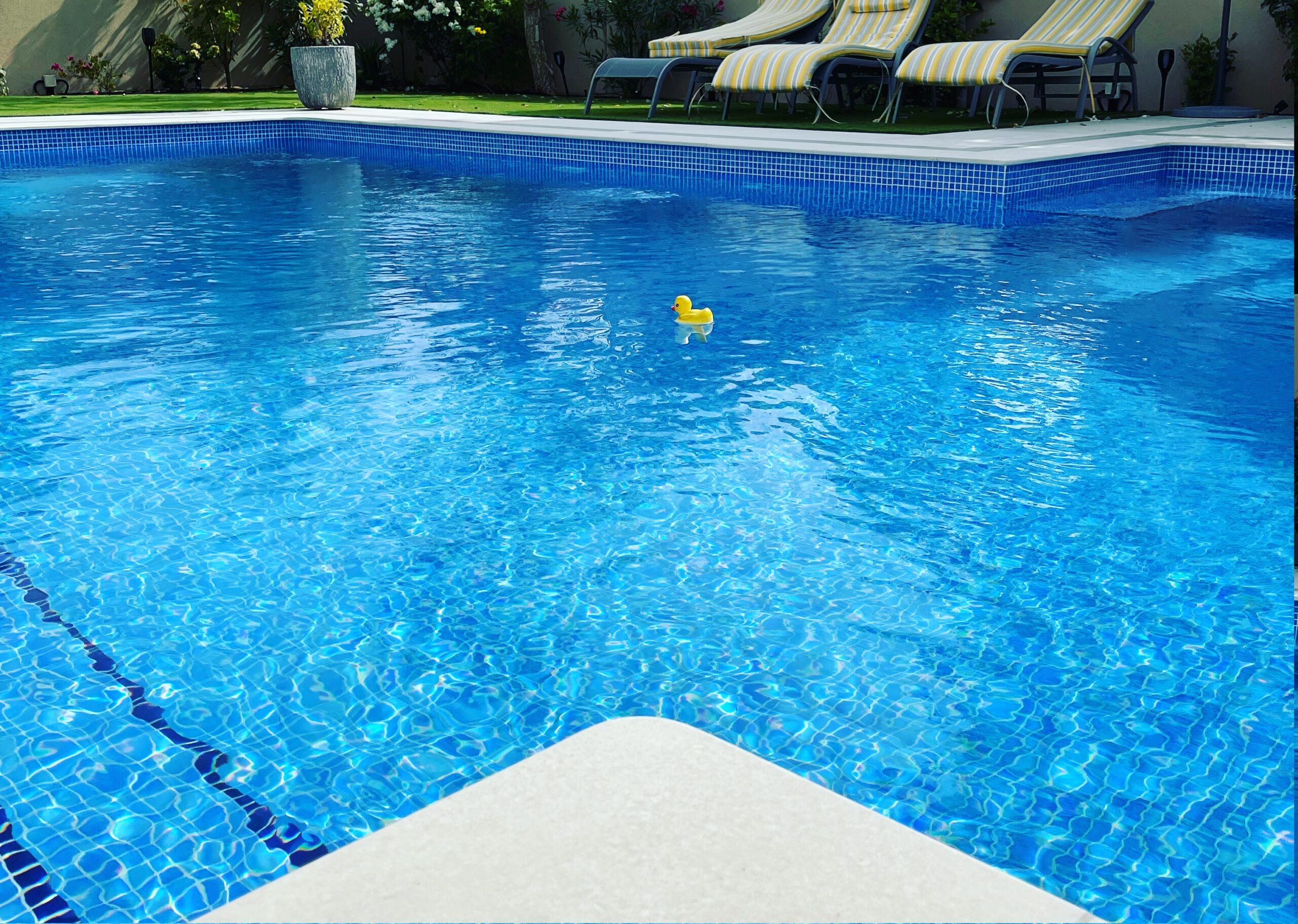
UV working to sanitize your pool
A majority of pool owners use chlorine to kill the bacteria, where they maintain 1 ppm (part per million) to 3 ppm of chlorine. A UV system can help a pool or spa owner reduce the cost of chlorine by 70% and a healthier and safer pool which can be enjoyed for a long time without red eyes or skin irritation.
As water passes the chamber the ultraviolet lamp eliminates or inactivates pathogens by altering their DNA. Algae, bacteria, and a multitude of other organisms are eliminated, leaving clear, clean water for your family to enjoy. Most customers with a UV pool sanitizer installed can maintain their chlorine residual at 0.3 parts per million (ppm) to 0.5 ppm instead of 1 ppm to 3 ppm.
Swimmers allergic to chlorine can now enjoy the benefits of UV System by maintaining a lower-than-normal chlorine required.
If given a choice, wouldn’t you love to swim in less chemicals anyway? You can now swim in clean fresh smelling pool with a UV pool sanitizer.
Get A Quote
Getting rid of algae can be arduous task! Every pool owner, at one point or another, has to deal with annoying algae. Not only is it frustrating in terms of appearance, it is also difficult to eliminate.
How to get rid of pool algae once and for all!
First of all it is important to identify which type of algae has invaded your swimming space. In general, there are 3 types of algae that typically invade your pool or spa. Algae is single celled and uses photosynthesis to manufacture its food. In most cases, algae is non viral and poses no concerns to your health, it is simply annoying for pool owners.
The most common pool algae found is “Green” algae. This can make your pool look cloudy and murky. This particular type will also stick to the walls of your pool and make your pool slimy. Traditional treatment includes a shock treatment with significant amounts of chlorine and algaecide.
“Black” pool algae is not very common, but much more likely to form on plaster and concrete pools. It typically shows up in cracks and crevices in shaded areas of the pool, but is not limited to such. Treatment of black algae includes scrubbing all areas it is present to break the protective slime coating, followed by shock treatments with significant amounts of chlorine and algaecide.
One of the toughest algae to deal with – its named due to is yellowish appearance. Although mustard algae is much more common in warmer climates, it can also show up in a few pools in cooler climates.
Mustard algae is tough to deal with because, although it is easy to scrub off the walls and floor of the pool, it can quickly reappear if cleaning has not been thorough. In fact, any pool components (lights, ladders, etc) should be removed and cleaned thoroughly. Furthermore, mustard algae is resistant to chlorine.
Again, traditional treatment includes several shocks with high levels of chlorine and algaecide.
With a UV System in place, you don’t have to worry about an algae invading your pool. Since the UV light disables the single cell DNA, algae cannot manufacture its own food through photosynthesis, thereby eliminating growth and expansion. As long as there is flow, algae will not have a chance to develop.
In the case of green algae, the UV pool system will likely be sufficient to clear up the pool once and for all. However, in severe cases it may be necessary to use traditional methods to eliminate the algae from the pool, particularly in the case of mustard algae. However, once it is dead, it will be gone for good with UV Pool System at work.